ASUS ROG Ally: Big Promises, Rough Reality
December 19, 2025
|
ASUS ROG Ally: Not An XBOX
Summary
When ASUS positions the new ROG Ally as “an Xbox in your hands,” expectations are naturally high.
December 19, 2025
|ASUS ROG Ally: Not An XBOX
When ASUS positions the new ROG Ally as “an Xbox in your hands,” expectations are naturally high.
On paper, the idea is compelling: a Windows-based handheld with access to an enormous game library, wrapped in a refreshed chassis and paired with an Xbox-style interface. After spending real time gaming on it, though, our experience was far more mixed.
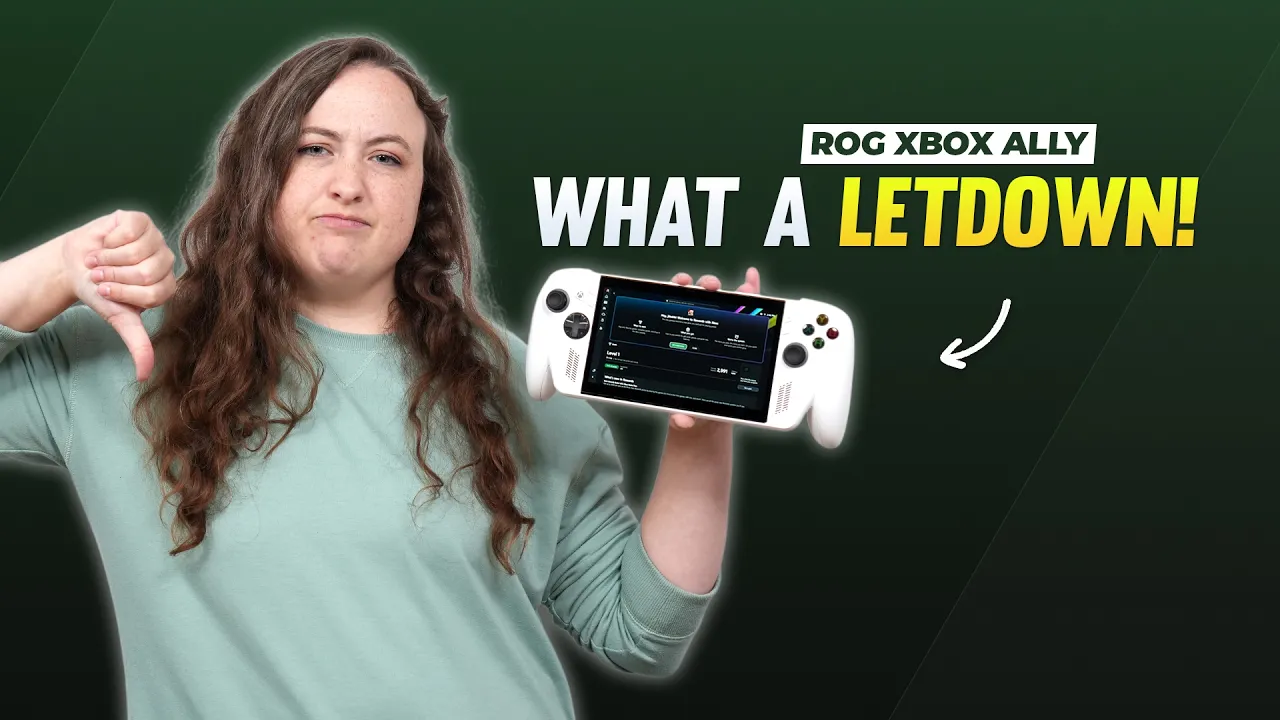
Yes, the ROG Ally can technically run modern AAA games—but whether they’re enjoyable is another question. Older and low-spec titles like Fallout: New Vegas, Hades II, Balatro, and Portal ran well and ended up being the most enjoyable experiences on the device. Some larger titles, including Forza Horizon 5, GTA V, and Elden Ring, were playable only at the lowest settings and often pushed the CPU and GPU to their limits.
More demanding modern games exposed the Ally’s hardware constraints. Titles like Monster Hunter Wilds and Riders Republic were effectively unplayable due to low frame rates, long shader compilation times, and severe input lag. Ultimately, the Ally feels best suited for games designed with lower-power hardware in mind.
One of the biggest issues with the base model Ally is its use of older CPU and GPU technology. With a Zen 2 CPU and RDNA 2 graphics—similar to what’s found in the much older Steam Deck—it already feels behind the curve. This makes the Ally hard to justify when compared to newer alternatives like the Ally X, which offers a much more modern Zen 5 and RDNA 3.5 platform.
The redesigned chassis is more comfortable than the previous Ally and the Steam Deck, thanks to angled grips and better weight distribution. It also stays cool in the hand and runs impressively quietly. That said, the device feels a bit plasticky, picks up dirt easily due to its white finish, and isn’t ideal for relaxed, reclined play sessions. Default analog stick dead zones are also poorly tuned out of the box, requiring manual adjustment that many users won’t want to deal with.
The 7-inch 1080p, 120Hz display looks sharp, bright, and smooth—one of the Ally’s strongest points. However, the high resolution works against it when navigating Windows. Touch targets are small, misclicks are common, and using Windows in handheld form remains clunky. This is an area where the Steam Deck’s console-like interface feels far more refined. To be fair, Valve has had longer to perfect it, and it didn't start out that way.
The Xbox-Windows hybrid experience simply isn’t ready. The interface frequently kicks you into full Windows mode, text is often too small, virtual keyboards don’t reliably appear, and launching games across different launchers is inconsistent at best. Even basic tasks often required digging through Reddit threads or YouTube tutorials.
The ROG Ally isn’t without merit. It’s quiet, comfortable, has a great display, and works well for older or low-demand games. But as a complete product, the base model feels half-baked. The hardware struggles with modern titles, and the software experience is frustratingly unpolished.
If you’re determined to buy into this ecosystem, the Ally X makes far more sense. Otherwise, for a smoother handheld gaming experience at this price point, the Steam Deck OLED remains the easier recommendation. For now, the ROG Ally feels like a glimpse of what handheld Windows gaming could be—just not what it should be yet.