Dell S Review: A Premium Laptop With Some Major Compromises
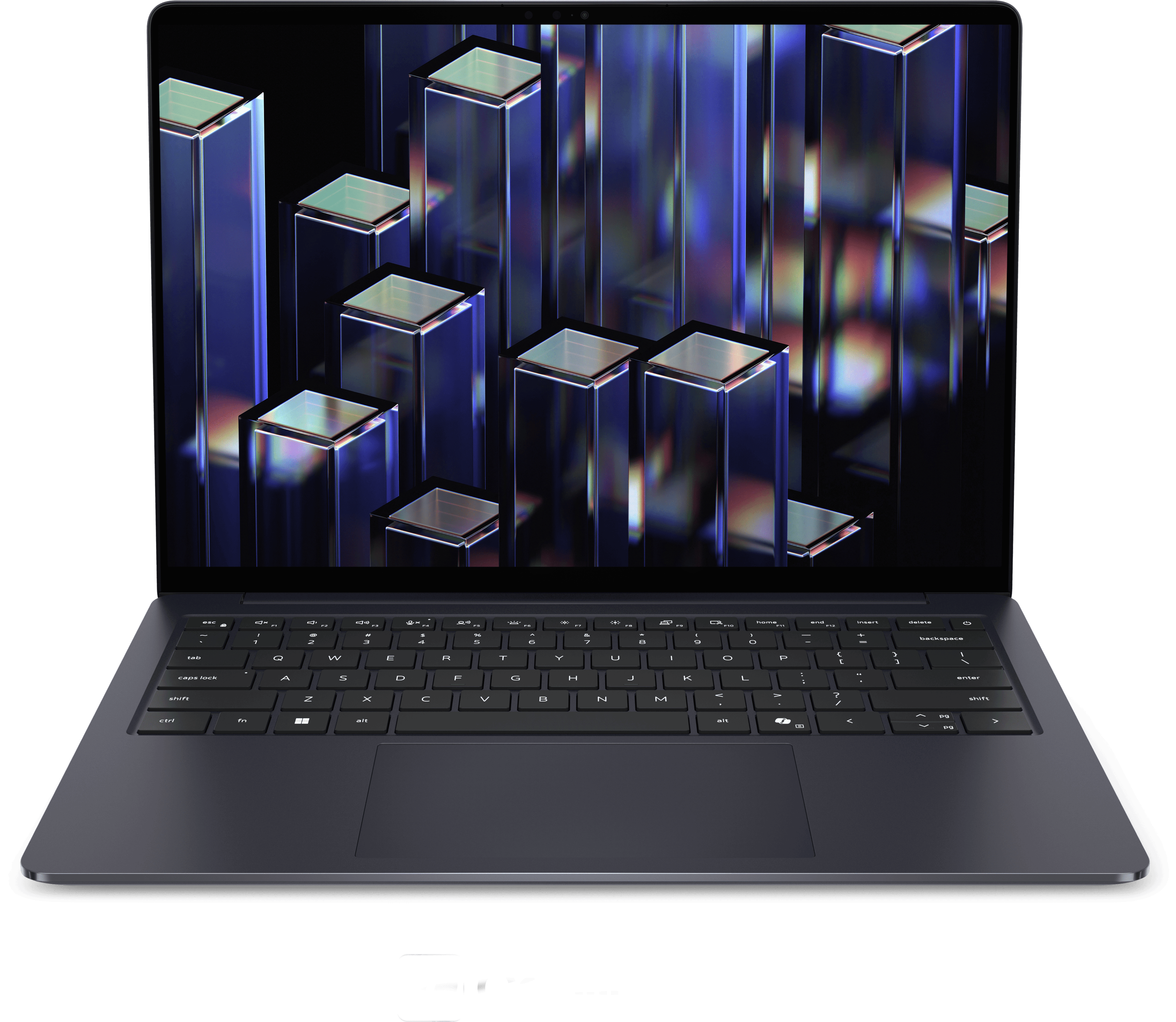
Dell's new S-series laptops are a big improvement over the company's older Inspiron and Dell Plus models in terms of build quality. They have comfortable keyboards, good trackpads, useful ports, and a more premium design.
Unfortunately, the experience varies dramatically depending on which configuration you buy. The 14-inch model has poor display options, while the 16-inch has two genuinely good screens. Performance is also underwhelming on the lower-end configurations, and both models are heavier than we'd like.
Overall, we think the 14-inch Dell S only makes sense below $1,000, while the 16-inch can be a good buy when discounted. The specific configuration matters a lot.
Chassis: A Big Improvement for Dell
One of the best things about the Dell S is its build quality.
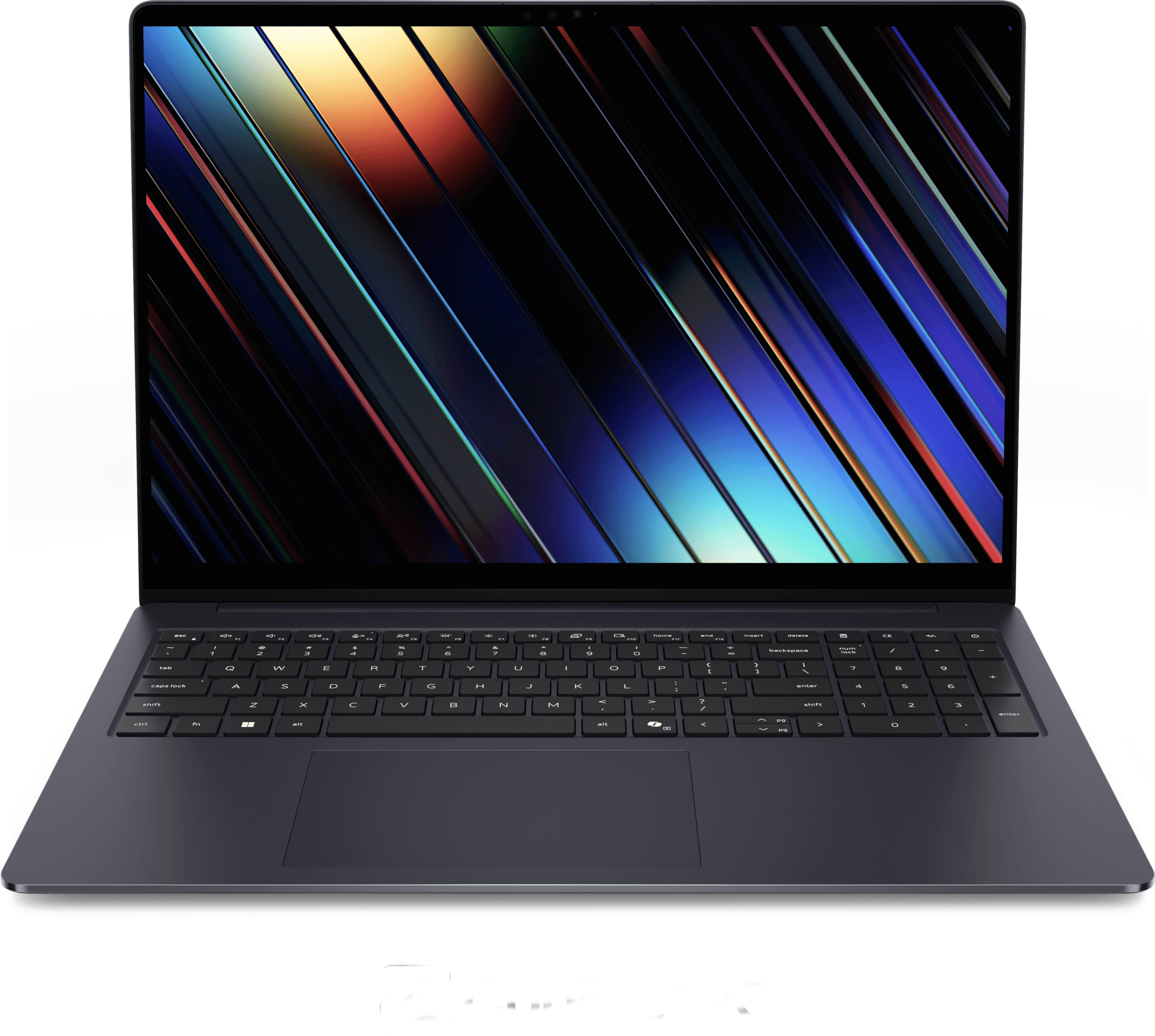
Previous Inspiron and Dell Plus laptops could feel noticeably cheap. The S-series is different. Both the 14- and 16-inch models feel much closer to something like a Lenovo Yoga, with very little flex in the keyboard deck and minimal flex in the lid.
The hinges are also reassuringly stiff. That's particularly useful on the touchscreen models, where touching the display doesn't cause the screen to flop backward.
Both sizes have a clean, understated design. Our units came in dark blue, although Dell also offers a light blue option. Which color you can get may depend on the configuration you choose, which is an unnecessarily confusing limitation.
There are a couple of downsides. The front edges of the chassis are quite sharp, which can become uncomfortable if you're typing on a plane without somewhere to rest your arms. More importantly, these laptops are fairly heavy for their size.
So while the S-series feels significantly more premium than Dell's previous midrange offerings, portability isn't its strong suit.
Keyboard and Trackpad: Some of Dell's Best
The keyboard is another area where Dell has made a meaningful improvement.
With 1.3mm of key travel and reasonable spacing, it's comfortable to type on and substantially better than the low-travel keyboards found on Dell's more expensive XPS models. There's also no distracting backlight bleed around the keys, making the keyboard easy to use in a dark room.
The layout is mostly standard, although the up and down arrow keys are compressed, as is common on modern laptops.
The keyboard isn't quite as good as Lenovo's Yoga keyboards, and it is somewhat louder while typing, but we'd still consider this a clear step forward for Dell.
The trackpad is similarly impressive. It's a smooth, accurate mechanical trackpad with a comfortable click that doesn't require much force. Our only real complaint is that it may be almost too smooth. Some people may find the surface a little slippery because there's very little resistance while moving a finger across it.
Overall, these are two of the stronger aspects of the Dell S.
Display: The 14-inch is the Problem
This is where the Dell S becomes much harder to recommend.
The 14-inch model has two display options in the U.S., and unfortunately neither is particularly good. Even the OLED option has a relatively low resolution, a 60Hz refresh rate, and limited brightness.
The alternative panel is brighter, but it isn't OLED and has poor colors as well as low resolution.
That's particularly frustrating because Dell clearly knows how to make a good display. The company's XPS 13 offers a significantly better screen at a much lower price, with higher resolution, better color accuracy, greater brightness, and a faster refresh rate.
The situation is much better on the 16-inch model.
We'd still recommend avoiding the Full HD panels because of their poor colors, but there are two good high-resolution alternatives. One is a 2560x1600 IPS display that gets quite bright and has good colors. The other is the 2880x1800 OLED panel found in our review unit. It supports up to 120Hz, has good colors, and includes touch.
The OLED models are glossy, however, so reflections can become distracting in bright environments. They also don't appear to support pen input despite being touchscreens.
For us, the takeaway is simple: be very careful about which display you buy. The 16-inch can have a great screen, while the 14-inch really doesn't (at least in the states).
Ports: A Good Selection
Connectivity is one of the easier parts of the Dell S to recommend.
Both sizes have the same port selection. On the left are two Thunderbolt 4 ports, which can also charge the laptop, along with a 5Gbps USB-A port and HDMI 2.1.
On the right is another 5Gbps USB-A port and a headphone/microphone combo jack.
That's a useful collection for a modern laptop. We would have preferred to see a USB-C charging port on both sides, though. An SD card reader would also have been a nice addition to the 16-inch model for photographers and light video editors.
Still, there's little to complain about here.
Dell offers the S-series with four different Intel processor tiers: Ultra 5, Ultra 7, Ultra X7, and Ultra 9.
The Ultra 5 and Ultra 7 models are aimed at everyday use, while the X7 and Ultra 9 provide considerably more performance.
Our units use the Ultra 7 355, and for normal office work they're perfectly capable. Large Excel spreadsheets, lots of Chrome tabs, and typical productivity applications all run without major problems.
They're not as immediately snappy as a MacBook, but they don't feel slow either. Light use is also pleasantly quiet, with little to no fan noise and no significant heat on the keyboard deck.
The problem appears when you ask for more performance.
The Ultra 7 sits toward the lower end of the performance spectrum for laptops at this price. The Ultra 5 will be slightly slower, while the X7 and Ultra 9 are much more competitive.
The Dell S also doesn't give its processors as much power as some competing laptops: around 25 watts in the 14-inch and 35 watts in the 16-inch. The smaller model in particular gets quite warm under sustained load and ramps up its fans significantly.
The 16-inch does somewhat better with heat and noise, but it isn't exceptional.
For gaming, the X7 is the configuration we'd choose. Its Arc B390 graphics can outperform some competing integrated GPUs, while Intel's broader game compatibility is a major advantage over Qualcomm's Snapdragon chips.
Battery Life: Surprisingly Mediocre
Battery life is one of the biggest disappointments.
The Dell S lasts roughly 9.5 to 10 hours in the office-task test. That's not terrible, but considering the laptops aren't particularly powerful to begin with, we expected more.
Real-world battery life should also be somewhat shorter than those numbers suggest.
There's another compromise: performance drops when running on battery. That means you're getting less performance at exactly the time when you might want your laptop to remain responsive.
For comparison, the Dell XPS 14 with the same processor lasted around 17 hours in the testing referenced here. That's a substantial difference.
Upgradeability: Limited
Inside, the 14- and 16-inch models appear to share much of the same basic hardware design, including a single-fan cooling system and the same battery capacity.
Neither is particularly exciting for upgradeability.
There's only one upgradeable SSD slot, even on the 16-inch model, where there's seemingly enough room for another drive. The Wi-Fi card is replaceable and supports the full Wi-Fi 7 specification.
The overall design reinforces the idea that these aren't intended to be performance-focused laptops.
So, Which Dell S Should You Buy?
The answer depends heavily on the price and configuration.
We don't particularly like the 14-inch model because its display options are simply too compromised. At around $1,000, there are better choices, including HP's OmniBook lineup. We'd only consider the 14-inch Dell S if it were available at a significant discount.
The 16-inch is much more compelling.
The configuration we'd be most interested in is the lower-end model paired with the bright, high-resolution display. At around $1,100 during the discount mentioned in our testing, it offers a premium-feeling chassis, comfortable keyboard, good trackpad, useful ports, and a genuinely good screen without paying for unnecessary upgrades.
The 2880x1800 OLED option is tempting, but we don't think it's worth paying an additional $600 for it. Dell's custom configuration system can also be frustrating because certain processors, colors, and displays are tied together in strange ways. Once you start adding upgrades, the price can quickly creep into territory occupied by better laptops.
For example, the Acer Swift 16 offers a good display, weighs less, and can provide better performance with an X7 processor.
Conclusion
The Dell S is a strange laptop.
On one hand, Dell has finally produced a midrange machine that feels genuinely premium. The chassis is well built, the keyboard is comfortable, the trackpad is good, and the port selection is solid.
On the other hand, Dell has made the buying process unnecessarily complicated, and some configurations simply aren't worth the money. The 14-inch display options are particularly disappointing, while the lower-end processors don't provide enough performance to justify a high price.
That's why we'd give the Dell S around 3.5 stars overall.
The 14-inch is only worth considering below $1,000, while the 16-inch is the model we'd actually recommend, especially when it's heavily discounted and paired with the bright, high-resolution display.
As always with laptops, the price matters. These machines can go from a reasonable deal to a poor value surprisingly quickly, so make sure you're getting the right configuration at the right price.