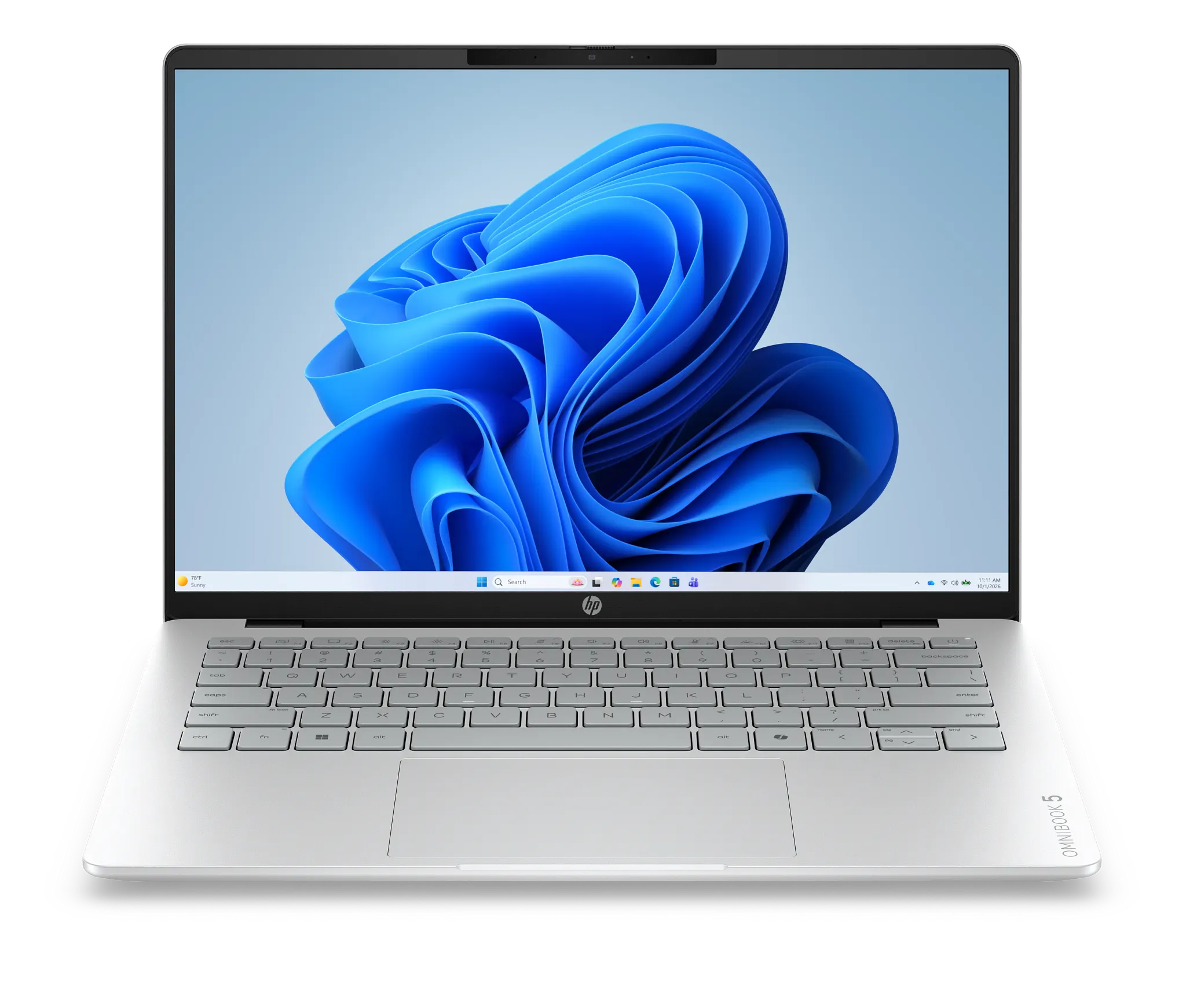
OmnHP OmniBook 5 Review: Good Value Only at the Right Price
The HP OmniBook 5 has changed considerably from last year's model. Once one of the easiest budget laptop recommendations, it now enters a far more competitive market where pricing has climbed significantly. That makes one question more important than ever: is the OmniBook 5 still worth buying?
The short answer is yes, but only if you can find it at the right price.
The entry-level configuration remains a capable everyday laptop with excellent battery life, a quality OLED display, and a generous selection of ports. However, the higher-end models become much harder to justify when they approach premium laptop pricing.
Price Determines Whether It's a Good Buy
The biggest takeaway from testing the OmniBook 5 isn't about its hardware it's about its value.
The budget configuration offers a well-rounded experience for users who primarily browse the web, work with Office applications, stream content, and need reliable battery life. At the right discount, it represents solid value.
The more expensive Core Ultra configurations are a different story. Once prices climb toward the $1,000 mark, buyers can choose from considerably stronger alternatives, including the MacBook Air and HP's own OmniBook 7 and OmniBook X. Those laptops deliver better overall performance and premium designs, making the OmniBook 5 difficult to recommend unless it's significantly cheaper.
The tested model uses Intel's standard Core Series 3 processor rather than the newer Core Ultra lineup. While Intel's naming makes the distinction confusing, the difference in performance is significant.
For everyday tasks, the laptop performs exactly as expected. Web browsing, document editing, video conferencing, and media consumption all run smoothly, making it a suitable option for students in non-technical fields and general home or office users.
Those needing extra computing power for programming, engineering software, creative applications, or demanding multitasking should look elsewhere. The OmniBook 5 simply isn't designed for heavier workloads, and several similarly priced competitors offer noticeably faster processors.
Graphics performance follows the same pattern. Casual games are playable, but this isn't a laptop intended for gaming, video editing, or other GPU intensive work.
Battery Life Is One of Its Biggest Strengths
Battery endurance remains one of the OmniBook 5's standout features.
In testing, it delivered around 11 hours of battery life, comfortably lasting through a full workday or a full day of classes. While last year's OmniBook 5 Flip lasted slightly longer, the newer model balances improved performance with still-excellent endurance.
For users who spend long days away from a charger, battery life is one of the strongest reasons to consider this laptop.

Omnibook 5 Battery Life
The Display Punches Above Its Price
One of the OmniBook 5's biggest surprises is its 14-inch OLED display.
OLED panels remain uncommon in budget laptops, making this one of the device's strongest selling points. Colors are vibrant, contrast is excellent, and everyday content looks noticeably better than it does on many competing IPS displays.
There are a few compromises. The 1920 × 1200 resolution isn't as sharp as higher-resolution displays found on more expensive laptops, while the 300-nit brightness limits outdoor usability. Still, for typical indoor use, the display delivers impressive image quality for this class of laptop.
The inclusion of a touchscreen also adds flexibility that many competitors don't offer.
Practical Design Over Premium Looks
The OmniBook 5 doesn't attempt to stand out visually.
Its design is understated and functional rather than eye-catching, although HP does offer more interesting color options depending on the model. Build quality is respectable overall, with sturdy hinges and a reasonably rigid display lid, though some flex is noticeable around the keyboard deck.
One welcome improvement is portability. Weighing around 2.9 pounds, the new model is substantially lighter than last year's version, making it much easier to carry throughout the day.
Excellent Connectivity Adds Everyday Convenience
Where many thin-and-light laptops continue removing ports, HP has taken the opposite approach.
The OmniBook 5 includes two USB-A ports, two USB-C ports with charging support, HDMI 2.1, and a headphone jack. This allows users to connect external displays, accessories, and storage without relying on adapters—a practical advantage over many competing ultrabooks.
The laptop also offers upgradeable storage and a replaceable Wi-Fi card, giving owners more flexibility than many sealed premium laptops.

Omnibook 5 weight comparison
Final Verdict
The HP OmniBook 5 is a capable everyday laptop whose appeal depends almost entirely on its asking price.
Its OLED display, excellent battery life, lightweight design, and comprehensive port selection make it a compelling option for students and office users who don't need high-end performance. However, its entry-level processor limits its usefulness beyond everyday productivity, and the premium-priced configurations simply face too much competition.
If you find the Core 5 model at a meaningful discount, the OmniBook 5 is an easy recommendation. If prices creep into premium territory, you're better served by alternatives like the MacBook Air, HP OmniBook 7, OmniBook X, or other laptops offering faster processors for similar money.
Pros
- Competitive price for what you get (when on sale).
- The highest end OLED screen is best in class for the price. It is high resolution (2880x1800), 120 hz, around 500 nits for SDR content, 1100 for HDR, and has excellent color gamut.
- The Starlit Blue model looks nice yet understated.
- Has pretty effective keyboard backlighting on the darker Starlit Blue colored model.
- Windows Hello via an IR Camera is standard.
- 16 GB of RAM is standard on all configs, unlike most other Intel Wildcat Lake laptops and the MacBook Neo.
- Very good port selection; much better than the XPS 13 or MacBook Neo. HDMI, USB-A, USB-C, and a headphone jack.
Cons
- The Intel Wildcat Lake (Core Series 3) CPU family is only suitable for light/casual use
- The BTO config options may get confusing; avoid the lower-end OLED screens with lower brightness and a lower resolution.
- Avoid the models with Wi-Fi 6 and Bluetooth 5.4; it uses a much slower, less reliable Realtek card than the Wi-Fi 7 model for only a $10 savings.
- The base model comes with only 256 GB of storage, which may not be enough for most users.
- A bit expensive for what you get when not on sale; wait for a sale before buying.