Design and Build Quality
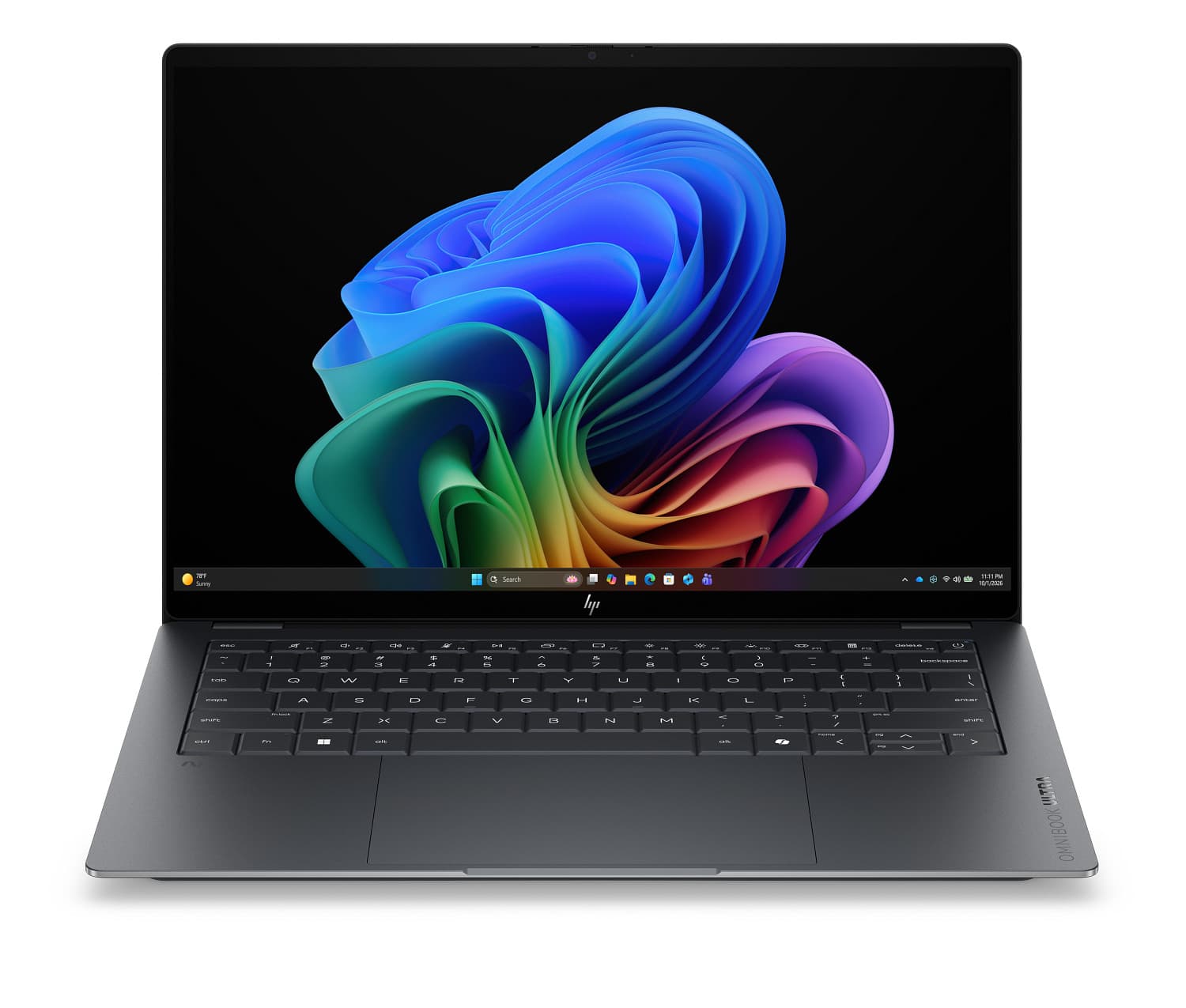
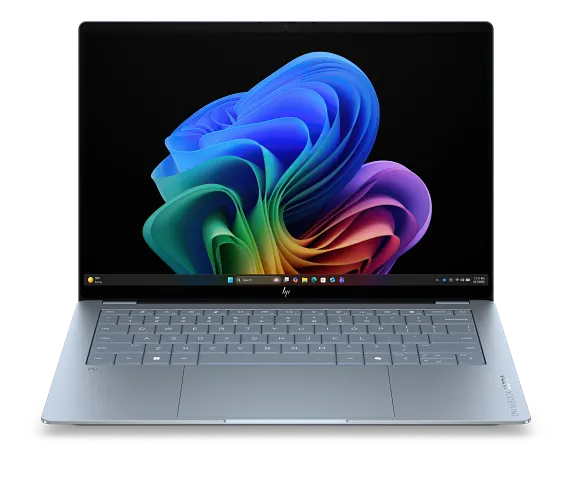
HP has done an excellent job redesigning the OmniBook Ultra. The aluminum chassis feels premium throughout, with attractive color options and a compact design that's easy to carry. Build quality is excellent, with very little flex, while the sturdy hinge supports touchscreen use without feeling too stiff.
Although it's lightweight, there are slightly smaller competitors, such as Lenovo's Yoga Slim 7i Ultra. Still, the OmniBook Ultra strikes a great balance between portability and premium construction.
Display
The 14-inch OLED display is one of this laptop's biggest highlights.
Its 2880 × 1800 resolution keeps text exceptionally sharp, while vibrant colors, excellent accuracy, and nearly 500 nits of brightness make it equally enjoyable for work and entertainment.
Like most OLED panels, it does have a glossy finish that reflects light, along with a slight screen door effect and PWM dimming. Neither issue significantly impacted our everyday use.
Keyboard, Trackpad, and Ports
The keyboard won't suit everyone. It has relatively short key travel, although the clicky feel makes typing satisfying once you adjust to it. It isn't as comfortable as Lenovo's keyboards, but it's considerably better than Dell's recent XPS models.
The haptic trackpad is excellent. Tracking is smooth, clicks feel natural, and palm rejection was flawless throughout our testing. It's one of the best Windows trackpads we've used.
Port selection is fairly minimal, with three USB-C ports supporting up to 40Gbps and a headphone jack. Charging from either side is convenient, but you'll need adapters if you regularly use USB-A devices or HDMI.

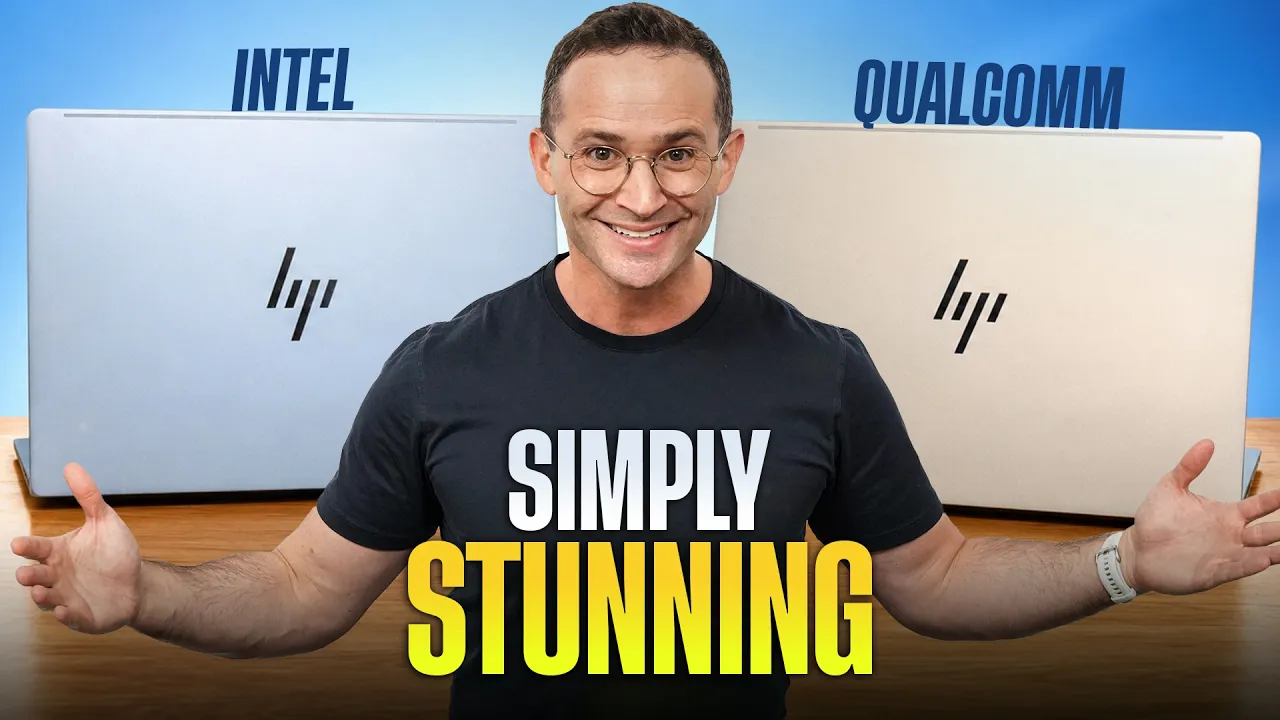
The Intel-powered HP OmniBook Ultra delivered nearly 12 hours of battery life in our office workload test, outperforming the Snapdragon model while ranking among the longest-lasting Windows laptops we've tested.
Both configurations handle everyday productivity with ease.
The Snapdragon model feels slightly faster during office work while remaining almost completely silent. The Intel version introduces a little fan noise during lighter workloads but stays noticeably cooler to the touch.
Battery life is outstanding on both models. Our Intel X9 configuration lasted around 12 hours in our productivity test, while the Snapdragon X2 Elite reached approximately 10 hours. Both maintain full performance when running on battery.

In Cinebench 2026, the Qualcomm-powered HP OmniBook Ultra delivers stronger multi-core CPU performance than the Intel version, making it the better choice for CPU-intensive productivity workloads.
If raw CPU performance is your priority, Qualcomm comes out on top.
The Snapdragon X2 Elite consistently outperformed Intel's Panther Lake processor in our Geekbench and Cinebench testing while delivering excellent efficiency.
Intel still performs very well, although HP limits sustained power more than some competing manufacturers, allowing other Panther Lake laptops to score slightly higher in prolonged workloads.
Its X7 and X9 processors include significantly stronger integrated graphics than Qualcomm's Snapdragon chips, making the Intel model better suited to light gaming, photo editing, and video editing.
The Snapdragon version also faces Windows on ARM compatibility limitations. Some games and professional applications require emulation, while others don't run at all.
Neither OmniBook Ultra replaces a laptop with dedicated NVIDIA graphics, but Intel offers the more versatile experience if your workload extends beyond everyday productivity.
Heat and Fan Noise
The Intel model runs cooler but produces more noticeable fan noise. The Snapdragon version remains impressively quiet but becomes significantly warmer during sustained CPU-heavy workloads.
For everyday use, neither issue proved distracting, but under heavier workloads the Intel model is more comfortable to use.
Should You Buy the HP OmniBook Ultra?
The Snapdragon X2 Plus and X2 Elite models are ideal for productivity-focused users who value strong CPU performance and quiet operation.
If you need broader software compatibility, stronger graphics, or occasional gaming, the Intel X7 or X9 models are the better choice.
Final Thoughts
HP has produced one of its best thin-and-light laptops in years. The OmniBook Ultra delivers premium build quality, an excellent OLED display, a superb haptic trackpad, and strong performance regardless of processor choice.
For most buyers, the decision comes down to workload. Snapdragon is the stronger productivity machine, while Intel offers the better all-around experience thanks to its graphics performance, software compatibility, and exceptional battery life.