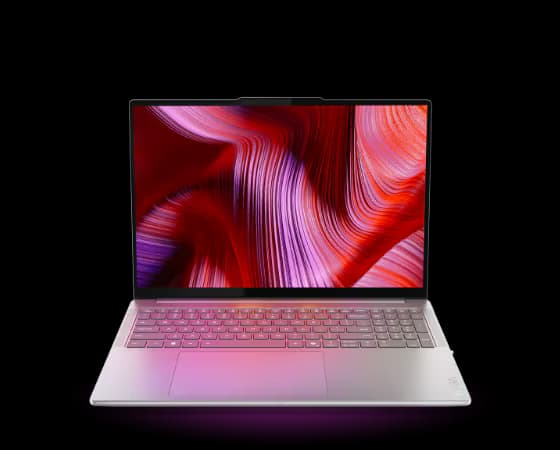
The issue is not that every Windows laptop is bad. There are still excellent deals if you know where to look. The problem is the Windows laptop ecosystem itself. Microsoft, Intel, AMD, Qualcomm, Nvidia, and laptop manufacturers are all pulling in different directions, and customers are the ones paying for it.
Windows Laptop Prices Are Getting Out of Hand
Let’s start with the most obvious problem: pricing.
In 2023, ASUS’s Zenbook 14 was regularly available for around $700. It was basically a less polished MacBook Air alternative, so that price made sense. Last year, it moved closer to $900. Now, similar models are showing up around $1,200.
That would be easier to accept if the laptops were dramatically better, but they are not always better. In some cases, they are actually worse. Some newer Zenbook models now ship with a lower-resolution OLED display than prior versions at similar or higher prices.
Qualcomm laptops are not immune either. Snapdragon models cost more now, and while the new chips are much better than the first generation, the price hikes are still hard to justify for most buyers.
Then there are Intel Panther Lake X laptops, the models with the stronger B390 integrated graphics. Dell’s XPS 14 can hit around $2,600, but it only feeds the chip around 25 watts, so performance is limited. ASUS’s ExpertBook Ultra is even more expensive.
These are, in many ways, MacBook Air-like devices. But the MacBook Air has not followed the same pricing trend. In fact, Apple’s comparable Air pricing has stayed stable or even dropped slightly in some common sale configurations.
Gaming Laptops Are Not Immune
Gaming laptops are seeing the same problem.
A few years ago, you could regularly find an ASUS Zephyrus G14 with an RTX 4060 for around $1,200. Now, last year’s model can be much more expensive, and some lower-priced configurations quietly use older processors.
Lenovo has similar issues. A prior Legion 5 configuration with strong specs may cost hundreds less than a newer model with very similar hardware. Razer’s Blade 16 also moved in the wrong direction, with some new configurations costing more while offering less memory than before.
That is the frustrating part. We are not always paying more for clearly better laptops. Sometimes we are paying more for a slightly refreshed chassis, a newer badge, or a spec sheet that is not meaningfully better.
Creator Laptops Got Hit Too
Creator laptops have also become harder to recommend at full price.
The Yoga Pro 9i used to be one of the best-value creator laptops around. In 2024, it was regularly available with an RTX 4060 for around $1,600. After a redesign, its pricing jumped dramatically. Even after discounts, it can still cost far more than it did a couple of years ago.
Meanwhile, Apple’s MacBook Pro pricing has moved much less aggressively, and in some cases Apple has added better base specs along the way.
The Laptops Still Have Basic Problems
If prices are going up this much, Windows laptops should feel dramatically better.
Some do. Build quality has improved, OLED displays are more common, and there are genuinely exciting devices out there. But the same old problems keep showing up.
Dell’s newer XPS keyboard is uncomfortable to type on. Some MSI Prestige laptops still get too hot under load. Acer’s oversized trackpad experiment sounds interesting, but poor palm rejection can make it frustrating enough that you may end up disabling it.
These are not tiny spec-sheet complaints. These are everyday usability issues. The kind of things you notice immediately when you actually use the laptop.
The Windows PC Model Feels Broken
The deeper issue is that the Windows laptop model has too many companies involved, and each one wants its cut.
Microsoft controls Windows. Intel, AMD, Qualcomm, or Nvidia provide the major chips. Laptop brands build the actual machines. Retailers add their own pricing games. Marketing money flows between all of them.
In theory, this model should create competition and better products. Sometimes it does. But right now, it often feels like the customer is paying for coordination problems.
A laptop may have a great CPU but poor power tuning. It may have a good GPU but bad battery behavior. It may have strong specs but a terrible keyboard. It may have premium pricing but confusing configurations that make it hard to know what you are actually buying.
Apple’s model is not perfect, but it is simpler. Apple controls the hardware, software, and chip design. That means fewer excuses when something does not work, and a more consistent experience when it does.
Windows laptop manufacturers do not have that same level of control, and it shows.
Microsoft Is Making Windows Worse
Microsoft is one of the biggest reasons this feels so frustrating.
Think about the last decade of Windows. How many updates have actually made your life meaningfully better? Now compare that to the number of popups, account prompts, Edge nags, OneDrive reminders, Office subscription pushes, and Copilot features that most people never asked for.
Instead of making Windows cleaner and more enjoyable, Microsoft has turned too much of the experience into a funnel for its own services.
The Copilot+ PC push is a good example. Microsoft tried to convince buyers that AI laptops were the next big thing because they had an NPU and a Copilot key. But for most people, the useful AI tools still run in the cloud because real AI workloads require far more compute and storage than these laptops offer.
Marketing Money Is Warping the Industry
Another problem is how much money flows through laptop marketing.
Sponsored videos, launch events, review guides, naming programs, and co-marketing deals often involve Microsoft, Intel, AMD, Qualcomm, or Nvidia, even when the laptop brand appears to be the face of the campaign.
That matters because whoever pays often influences the message. If a video is sponsored by one chip company, competitors may not be discussed. If a launch is heavily funded, certain phrases or comparisons may get repeated across coverage.
This is part of why we avoid sponsored videos that look like reviews. It is too easy for marketing to blur into buying advice.
Marketing dollars can also influence laptop design and naming. Some laptops exist in certain configurations because of incentives behind the scenes. Some product names feel designed more to satisfy partners than to help customers.
Product Naming Is a Mess
Even if you ignore pricing and marketing, the names alone are a problem.
Intel, AMD, Qualcomm, and Nvidia have all made their product stacks harder to understand. A “Core Ultra 7” is not always faster than a “Core Ultra 5” if they are from different series. Two laptops with the same Nvidia GPU name can perform very differently depending on wattage. A 75-watt RTX 5060 and a 115-watt RTX 5060 are not the same experience, but the name does not make that obvious.
That confusion creates room for bad buying decisions. It also lets sellers market old or weak laptops as “gaming” machines, even when they do not have the graphics performance to deserve that label.
The average buyer should not need to decode processor generations, GPU wattages, display panel downgrades, and hidden configuration changes just to avoid getting ripped off.
What You Should Do Instead
The good news is that buyers still have power.
First, if you are open to macOS, it has never been easier to recommend at least looking at a MacBook. The MacBook Air is often a better value than premium Windows ultraportables, and the MacBook Pro remains extremely strong for creators and developers.
Second, do not assume newer means better. Some older Windows laptops are much better deals than their replacements. Last year’s models often deliver 90% of the experience for far less money.
Third, track price history. A laptop that looks like it is “on sale” may still be overpriced compared to what it has sold for before. That is exactly why we built BestLaptop.deals: to show real price history across retailers and make it easier to spot actual deals.
There are still great Windows laptops out there. You just need to be more careful than ever.
Conclusion
Buying a Windows laptop has become more confusing, more expensive, and more frustrating than it should be.
But there are still good choices. MacBooks are stronger value picks than they have been in years. Older Windows laptops can still be excellent buys. And some manufacturers, like Framework, are pushing in a better direction with repairability and Linux support.
The key is to stop buying the hype. Check real pricing, understand the configuration, and do not reward companies for charging more while giving you less.
Pros
- Excellent value and one of the laptops we would recommend to most people that are ok with Apple’s operating system.
- Very strong performance for light use, with a snappy everyday experience.
- Excellent real-world battery life for typical office and writing use.
- Completely silent because there is no fan.
- Both 13-inch and 15-inch versions are highly portable for their size.
- Trackpad remains best-in-class with excellent palm rejection.
Cons
- M5 is only a modest upgrade over M4 in many workloads.
- Sustained heavy performance is limited by the fanless design.
- The display is still a 60Hz IPS panel, which could be better in a premium laptop in 2026.
- The keyboard feels a bit low travel, especially on the 15-inch model.
- Ports are still limited to two Thunderbolt 4 USB-C ports and a MagSafe 3 port on the left side (all of the charging ports are on the left side) and a 3.5 mm headphone/microphone combo jack on the right side.
Pros
- Tandem OLED display is absolutely stunning
- Keyboard is very comfortable
- Performs very well for a somewhat portable 16 inch laptop
- Speakers sound great
- Doesn't feel too warm to the touch
Cons
- When pushing the laptop for an extended period of time the battery drains while plugged in
- Fan noise is very audible on highest performance mode
- Trackpad is not as good as the rest of the laptop
- Shorter battery life than competitors
- SD card reader is slow